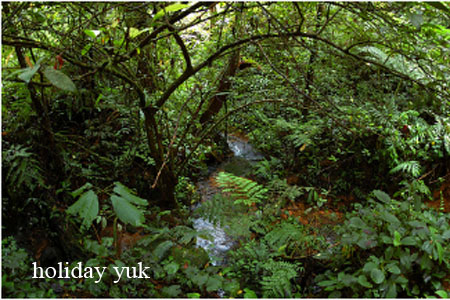
On the island of Papua, there are three national parks, the National Park Cendrawasih, Lorentz National Park, and the National Park Wasur. Wasur National Park, situated at the eastern end of Indonesia though for other national parks on the island of Papua will be talked about later.
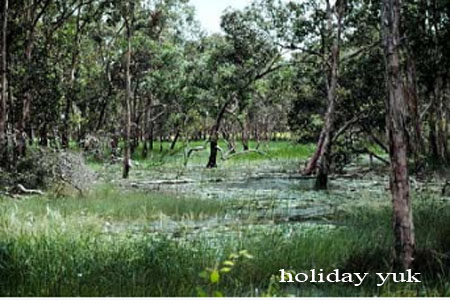
Wasur National Park, including parts of the Sota (Merauke), is the most eastern region of Indonesia. Although the conditions of this area less attention, but this area is still maintained as the east end of the area immediately adjacent to the country of Papua New Guinea.
Here, there are still many traditional houses of Papua are often called Honai with a shape like a dome.
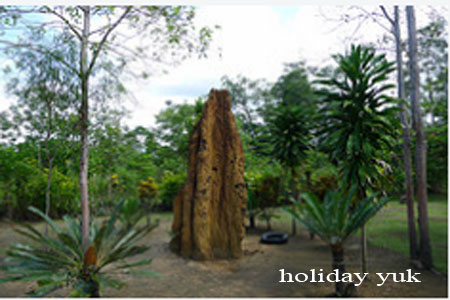
In one corner of the recreation center, guests will also find a special building, called Musamus. Musamus is the ant nest with various sizes, from a few centimeters to 3 meters. These object are many found in the National Park Wasur.
Data from the Ministry of Tourism of the Republic of Indonesia, the Ministry of Forestry and the National Park Wasur mentioned that,
70 percent of the national park consists of savanna vegetation, while the rest consists of swamp forest, coastal forest, bamboo hamlets, and meadows and forests sago wide.
The main species in the National Park Wasur, among others, the tree kangaroo (Dendrolagus handles), Musk King (Psittrichas fulgidus), Cassowary wattle (Casuarius sclateri), Bird Mabruk (Goura cristata), bird of paradise large yellow (Paradisea apoda novaeguineae), Cendrawasih King ( Cicinnurus regius rex), red bird of paradise (Paradisea rubra), freshwater crocodile (Crocodylus novaeguineae), and the saltwater crocodile (C. porosus).
Wasur National Park has abundant biodiversity, so it was dubbed the "Serengeti of Papua".
The wetlands in this national park is the most favorable biological systems to provide food and collateral materials for the life of the various types of fish, shrimp and crab.
There are six (6) kinds of biological systems in Wasur National Park include:
There is a vacationer destination area for watching natural life among is savanna Ukra, Kankania, Mar, Kondo and Prem Rawa Biru. Sorts of creatures that can be seen in this area are kangaroos, water-winged animals, reptiles, and deer. To backing this visit, developed supporting offices, for example, the perception tower however yet there is a home remain. This area must be gone to amid the dry season utilizing ground vehicles (two or four wheels) with a 2-to 5 hour's long excursion.
Range utilized as the area of flying creature perception there is in Kankania, Blue Swamp, Swamp Ndalir, Rawa Poo and Yanggandur. Crap bog and bog Ndalir can be gone by whenever by utilizing four-wheeled vehicles. Types of flying creatures that can be found in this area are Cendrawasih, parrot, cockatoo, Pelikan, Ibis, grouse, Betet, Bayan, Rajawali Irian, kestrel (frogmouth), savvy fowls, little maleo and others.
Likewise, visitors can likewise watch the vicinity of vagrant feathered creatures, for example, Pelikan/Undan Australia (Pelicanus conspicillatus), Ibis (straw-necked polished), BOHA (jaybird geese), Gajahan (little curlew), Part spoon (Royal spoonbill), and so forth. With respect to the area of the perceptions can be found in the Swamp Dogamit and Ndalir Beach, Swamp Blatar SPTN II Ndalir locale.
The scene at a few areas with the arrangement of plants and trees sufficiently fascinating to be the object of characteristic attractions. Normal grand excellence can be found at different purposes of areas extending from savanna forests, prairies, swamps, shorelines until the overwhelming backwoods.
Seen the setting of the sun amidst the desert/savannah or shoreline Ndalir-Onggaya while joined by the customary anglers is additionally a fascination claimed by the National Park Wasur.
The spread of savanna and open meadows and muddy in a few areas ODTWA zones suitable for outdoors for school youngsters and voyagers who like outdoors in the open. A few territories of savanna are suggested as campgrounds, among others Savana Ukra, Mar, Kankania, Kondo and Biras (area outdoors ground).
This vacation destination is an area frequented by neighborhood voyagers Merauke both people and gatherings, particularly on Sundays and occasions. Exercises that can incidentally do are shower/swimming and angling. The offices accessible in this item are a haven, toilets, and spans. Access to achieve this area is entirely simple and does not take quite a while; the excursion can be achieved utilizing ground vehicles (two-wheel/four) with a travel time ± 30 minutes to the extent 27 km from the town of Merauke.
A few social attractions that can be shown as a vacation spot is the move (Gatsi, Etor), material handling customary sustenances (Zeb/blaze stone, sago, kumbili), conventional artworks (woven, imprinting), conventional chasing (utilizing bolts, copying creature sound), eucalyptus oil refinery and customary angling (utilizing Tanggu) and the initiation of indigenous kids.
There are two approaches to get to the area for the National Park region Wasur to be specific:
Carriers, utilizing the plane flight to Merauke from the area where you live. A few alternatives including air transporter Garuda Indonesia, Sriwijaya Air, Lion Air, and so forth.
Ocean paths could utilize the administrations of traveler boats PT. PELNI, in particular, KM Tatamailau, and KM. Flores with voyage plans every month to and from Merauke.
To get to the National Park Wasur, from Merauke you can utilize wheeled vehicles two (2) or four with a voyage time of around 50 minutes.
Here you discover the experience remarkable. Welcome to the national park Wasur.
Wasur
Wasur National Park, including parts of the Sota (Merauke), is the most eastern region of Indonesia. Although the conditions of this area less attention, but this area is still maintained as the east end of the area immediately adjacent to the country of Papua New Guinea.
Here, there are still many traditional houses of Papua are often called Honai with a shape like a dome.
In one corner of the recreation center, guests will also find a special building, called Musamus. Musamus is the ant nest with various sizes, from a few centimeters to 3 meters. These object are many found in the National Park Wasur.
Data from the Ministry of Tourism of the Republic of Indonesia, the Ministry of Forestry and the National Park Wasur mentioned that,
70 percent of the national park consists of savanna vegetation, while the rest consists of swamp forest, coastal forest, bamboo hamlets, and meadows and forests sago wide.
Excellence Wasur National Park
The main species in the National Park Wasur, among others, the tree kangaroo (Dendrolagus handles), Musk King (Psittrichas fulgidus), Cassowary wattle (Casuarius sclateri), Bird Mabruk (Goura cristata), bird of paradise large yellow (Paradisea apoda novaeguineae), Cendrawasih King ( Cicinnurus regius rex), red bird of paradise (Paradisea rubra), freshwater crocodile (Crocodylus novaeguineae), and the saltwater crocodile (C. porosus).
Wasur National Park has abundant biodiversity, so it was dubbed the "Serengeti of Papua".
The wetlands in this national park is the most favorable biological systems to provide food and collateral materials for the life of the various types of fish, shrimp and crab.
There are six (6) kinds of biological systems in Wasur National Park include:
- salt water; in the region of Rawa Taram, Rawa Kitar-kitar, Supposition and Samleber.
- new water constantly; in Rawa Biru, Ukra, Maar, and Kankania.
- freshwater beaches; in the district Mbo, Okilur, Rawa Pilmul and guess.
- inland fresh water, which is along the Trans-Guinea.
- Bitter salt water near the beach, located in the area around the settlement apart from Kampung Kondo.
- bitter water land; located in Kampung Wasur, Ndalir, and Kampung Rawa Sota
Activities in the National Park Wasur
Natural life perception
There is a vacationer destination area for watching natural life among is savanna Ukra, Kankania, Mar, Kondo and Prem Rawa Biru. Sorts of creatures that can be seen in this area are kangaroos, water-winged animals, reptiles, and deer. To backing this visit, developed supporting offices, for example, the perception tower however yet there is a home remain. This area must be gone to amid the dry season utilizing ground vehicles (two or four wheels) with a 2-to 5 hour's long excursion.
Flying creature perception
Range utilized as the area of flying creature perception there is in Kankania, Blue Swamp, Swamp Ndalir, Rawa Poo and Yanggandur. Crap bog and bog Ndalir can be gone by whenever by utilizing four-wheeled vehicles. Types of flying creatures that can be found in this area are Cendrawasih, parrot, cockatoo, Pelikan, Ibis, grouse, Betet, Bayan, Rajawali Irian, kestrel (frogmouth), savvy fowls, little maleo and others.
Likewise, visitors can likewise watch the vicinity of vagrant feathered creatures, for example, Pelikan/Undan Australia (Pelicanus conspicillatus), Ibis (straw-necked polished), BOHA (jaybird geese), Gajahan (little curlew), Part spoon (Royal spoonbill), and so forth. With respect to the area of the perceptions can be found in the Swamp Dogamit and Ndalir Beach, Swamp Blatar SPTN II Ndalir locale.
Panorama
The scene at a few areas with the arrangement of plants and trees sufficiently fascinating to be the object of characteristic attractions. Normal grand excellence can be found at different purposes of areas extending from savanna forests, prairies, swamps, shorelines until the overwhelming backwoods.
Beach of Onggaya
Seen the setting of the sun amidst the desert/savannah or shoreline Ndalir-Onggaya while joined by the customary anglers is additionally a fascination claimed by the National Park Wasur.
Outdoors Ground
The spread of savanna and open meadows and muddy in a few areas ODTWA zones suitable for outdoors for school youngsters and voyagers who like outdoors in the open. A few territories of savanna are suggested as campgrounds, among others Savana Ukra, Mar, Kankania, Kondo and Biras (area outdoors ground).
Bathing place
This vacation destination is an area frequented by neighborhood voyagers Merauke both people and gatherings, particularly on Sundays and occasions. Exercises that can incidentally do are shower/swimming and angling. The offices accessible in this item are a haven, toilets, and spans. Access to achieve this area is entirely simple and does not take quite a while; the excursion can be achieved utilizing ground vehicles (two-wheel/four) with a travel time ± 30 minutes to the extent 27 km from the town of Merauke.
A few social attractions that can be shown as a vacation spot is the move (Gatsi, Etor), material handling customary sustenances (Zeb/blaze stone, sago, kumbili), conventional artworks (woven, imprinting), conventional chasing (utilizing bolts, copying creature sound), eucalyptus oil refinery and customary angling (utilizing Tanggu) and the initiation of indigenous kids.
Access
There are two approaches to get to the area for the National Park region Wasur to be specific:
Carriers, utilizing the plane flight to Merauke from the area where you live. A few alternatives including air transporter Garuda Indonesia, Sriwijaya Air, Lion Air, and so forth.
Ocean paths could utilize the administrations of traveler boats PT. PELNI, in particular, KM Tatamailau, and KM. Flores with voyage plans every month to and from Merauke.
To get to the National Park Wasur, from Merauke you can utilize wheeled vehicles two (2) or four with a voyage time of around 50 minutes.
Here you discover the experience remarkable. Welcome to the national park Wasur.